
村田兼一写真展「眠れる小さき女神」
6月5日(金)~21日(日)|月火休廊|13時~19時
Kenichi Murata Exhibition | June 5–21, 2026 | Mon–Tue closed | 1–7 PM
眠れる小さき女神
神話の歴史を紐解けば、神には二つの運命があることに気づかされる。
一つは忘れられること。そしてもう一つは、姿を変えて生き残ることだ。
かつて、この世界の中心には女神たちがいた。大地を司り、月を統べ、生命の根源として人々の祈りの中に君臨した彼女たち。しかし、社会の変容と共にその地位は奪われ、母系的な世界観が父系へと塗り替えられるなかで、女神たちは王座から退き、男神の配偶者や補助的な役割へと追いやられていった。
やがて新しい宗教や合理的な思想が芽生えると、彼女たちは完全に人々の祈りから遠ざかる。だが、神は死ぬのではない。ただ忘れられるのだ。かつての力強き神は、人々の記憶の深層へと身を潜め、地名や花の名、あるいは古い伝承の中にわずかな痕跡を留めるだけの「小さき神(リトル・ゴッド)」へと姿を変えていく。
今回の作品群において、私はそうした忘れられた女神たちの姿を想像し、レンズを向けた。
祈りを失い、名を呼ばれることもなくなった彼女たちは、もはや世界を動かす力を持たない。ただ神話の深層に沈み、孤独な忘却の中で眠り続けている。しかし、肉体という名の神殿を借りて現れた彼女たちの静かな佇まいは、言葉を超えた強い意志を放っている。
一方で、神にはもう一つの運命がある。
信仰が衰えてもなお、執拗に姿を変えながら生き延びる強靭な神性だ。あるときは土地の精霊、あるときは民間信仰の守護者、またあるときは別の聖人へとその名を変える。
月、豊穣、運命、音楽——。人間が世界を理解するために必要とした根源的な象徴は、断絶することなく、時代に合わせた仮面を付け替えて人々の生活の中に残り続ける。
忘却の底で眠り続ける「小さき女神」と、時代の波間を泳ぎ渡り、今も私たちの傍に潜む「残り続ける女神」。
レンズ越しに映し出された彼女たちの肉体は、失われた神話の断片であり、同時に現在進行形の聖域でもある。神が永遠を生きる存在であるならば、名を呼ばれぬ沈黙の時代もまた、彼女たちの長い生涯の一部に過ぎない。
静寂の中に横たわる彼女たちの肌に、かつての威光と、変容し続ける生命の律動を感じていただければ幸いです。
ken-ichi murata
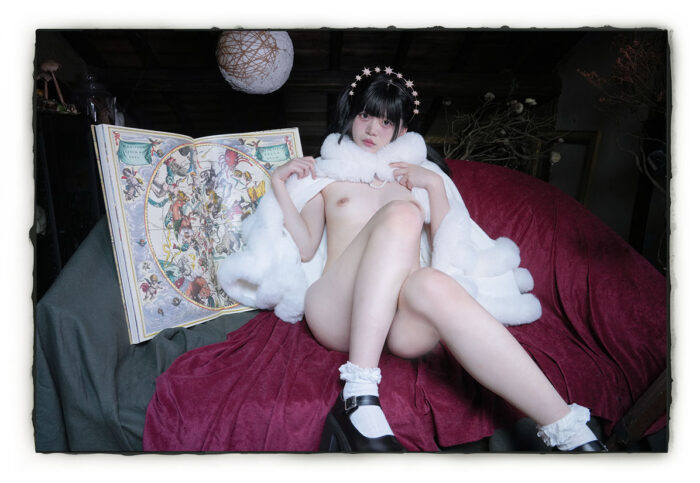
Kenichi Murata Photography Exhibition — Sleeping Lesser Goddess
June 5 (Fri) – 21 (Sun), 2026 | Mon–Tue closed | 1–7 PM | Jimbocho Gallery
Sleeping Lesser Goddess
Unraveling the history of mythology reveals that gods are destined for one of two fates.
One is to be forgotten. The other is to survive by altering their form.
Once, goddesses stood at the center of the world. They governed the earth, ruled the moon, and reigned within people’s prayers as the very source of life. However, as society transformed, their status was stripped away. As matriarchal worldviews were overwritten by patriarchal ones, these goddesses retreated from their thrones, relegated to the roles of consorts to male deities or other auxiliary figures.
Eventually, with the dawn of new religions and rational thought, they faded entirely from the realm of human prayer. Yet, gods do not die. They are simply forgotten. These once-mighty deities conceal themselves in the depths of human memory, transforming into “lesser gods” who leave but faint traces behind in the names of lands, the names of flowers, or within ancient folklore.
In this body of work, I imagined the forms of these forgotten goddesses and turned my lens toward them.
Deprived of prayer and no longer called by their names, they no longer possess the power to move the world. They merely sink into the depths of myth, continuing to slumber in solitary oblivion. And yet, manifesting through the temple of the flesh, their quiet presence radiates a profound will that transcends words.
Conversely, there is another fate for the gods.
It is a resilient divinity that survives by tenaciously shifting its form, even as faith wanes. At times a spirit of the land, at others a guardian of folk belief, or taking on the name of a new saint. The moon, fertility, destiny, music—the primordial symbols humanity required to comprehend the world remain unbroken, lingering in our daily lives by donning masks suited to the era.
The “lesser goddesses” slumbering in the depths of oblivion, and the “enduring goddesses” who navigate the tides of time to dwell beside us still.
Captured through the lens, their bodies are fragments of lost mythology, and simultaneously, sanctuaries of the present moment. If gods are beings of eternity, then this era of silence—where their names go uncalled—is but a fleeting chapter in their endless existence.
ken-ichi murata